
EVERY Premier League Football Club Should Have a HEAD OF MUSIC
In 2021, I managed to get a meeting with the Head of Marketing at Tottenham Hotspur, my boyhood club. My opening pitch was simple: “You should buy the rights to Chas and Dave’s back catalogue as a new stream of revenue for the club.” I knew it was a slightly ridiculous suggestion, but I wanted to make a point. It got their attention, and it marked the start of my fascination with the intersection between football and music, two of Britain’s most powerful cultural exports, too often treated as strangers.
Premier League football clubs are mostly well-oiled machines. Every function is managed by a specialist: ticketing, hospitality, digital content, right down to the data analytics used to measure every pass and sprint. Beyond the pitch, the most carefully protected asset is the club’s brand, a growing priority in the era of global fanbases and off-field revenue.
Football is all about statistics these days, so lets look at the numbers.
The UK’s music industry, spanning live events, recorded music, and publishing, contributed £6.7 billion to the economy in 2022. It supports nearly 210,000 jobs and generates £4 billion in exports. Live music alone brought in over £1.6 billion, fuelled by strong fan demand at stadiums, festivals, and grassroots venues.
Football, by comparison, is similarly dominant. The Premier League alone generates over £3 billion annually in broadcasting revenue, with the wider UK football sector valued at £6.2 billion. Clubs now function as content studios, commercial brands, and event operators, not just sporting institutions.
So, music and football are economic equals in the UK, two industries embedded in national identity, with massive cultural and commercial reach. Yet despite the clear overlap, music is rarely managed strategically inside football clubs.
That’s a structural blind spot. Clubs have heads of performance, heads of fashion, even heads of crypto, but no Head of Music, a role that could unite fan engagement, brand positioning, revenue, and culture under one cohesive strategy.
A Shared History: Chants, Anthems, and Club Culture
The relationship between music and football isn't new; it’s foundational. For decades, the sounds of the game have been just as iconic as the goals. Chants and terrace songs have shaped the atmosphere of stadiums, creating a shared language among fans that transcends generations. From Liverpool’s adoption of “You’ll Never Walk Alone” to the widespread use of pop anthems like “Freed from Desire,” music has always been the emotional engine of matchdays.
The connection between music and football started decades ago. Clubs and national teams regularly released official singles, some of which became genuine hits. Tottenham Hotspur’s “Ossie’s Dream” in 1981, or England’s “World in Motion” by New Order in 1990, blurred the lines between sport and pop culture. They were expressions of identity, moments when music and football collided to reflect the mood of fans and the character of clubs.
Football culture has always had its own soundtrack, created organically by fans and amplified through history. But in today’s hyper-commercial landscape, very few clubs take ownership of their musical identity. What was once an informal tradition is now a missed opportunity. With the right leadership, it could be transformed into a strategic asset.
The Modern Shift: Football Clubs as Entertainment Brands
Like it or not, Premier League clubs are no longer just football teams; they are global media, fashion, and lifestyle brands. From content creation to commercial partnerships, clubs are expected to engage fans 24/7, not just for 90 minutes on matchday. Music plays a central role in this shift, but it’s often treated as background noise rather than a strategic asset.
A few clubs are starting to challenge that. In 2021, Wolverhampton Wanderers launched Wolves Records, becoming the first UK football club to create an in-house record label. The initiative, developed in partnership with Warner Music’s ADA, allows the club to sign and promote artists, produce original content, and connect local music with global football audiences.
Meanwhile, Aston Villa has been curating and publishing official playlists on Spotify, often with input from players and fans. It’s a small step, but one that recognises music as part of the club’s identity and a tool for building stronger fan engagement on and off the pitch.
Large concerts have always been a major success. Stadiums like Tottenham Hotspur’s now rival the O2 in hosting global tours. Beyoncé, Lady Gaga, Guns N’ Roses have all performed there. Anfield has hosted Elton John and will soon welcome Taylor Swift. These aren’t just side hustles; they’re major revenue streams and fan touchpoints, often involving partnerships with artists, promoters, and sponsors. Stadiums are now competing for artists like any arena or major festival.
Looking at the plans for the proposed new Manchester United Stadium, it’s clear that they are thinking about wider cultural entertainment as both a way to generate new revenue and connect with new fans - they want to create a global destination. Live Music will certainly feature and will no doubt be part of the experience going forward.
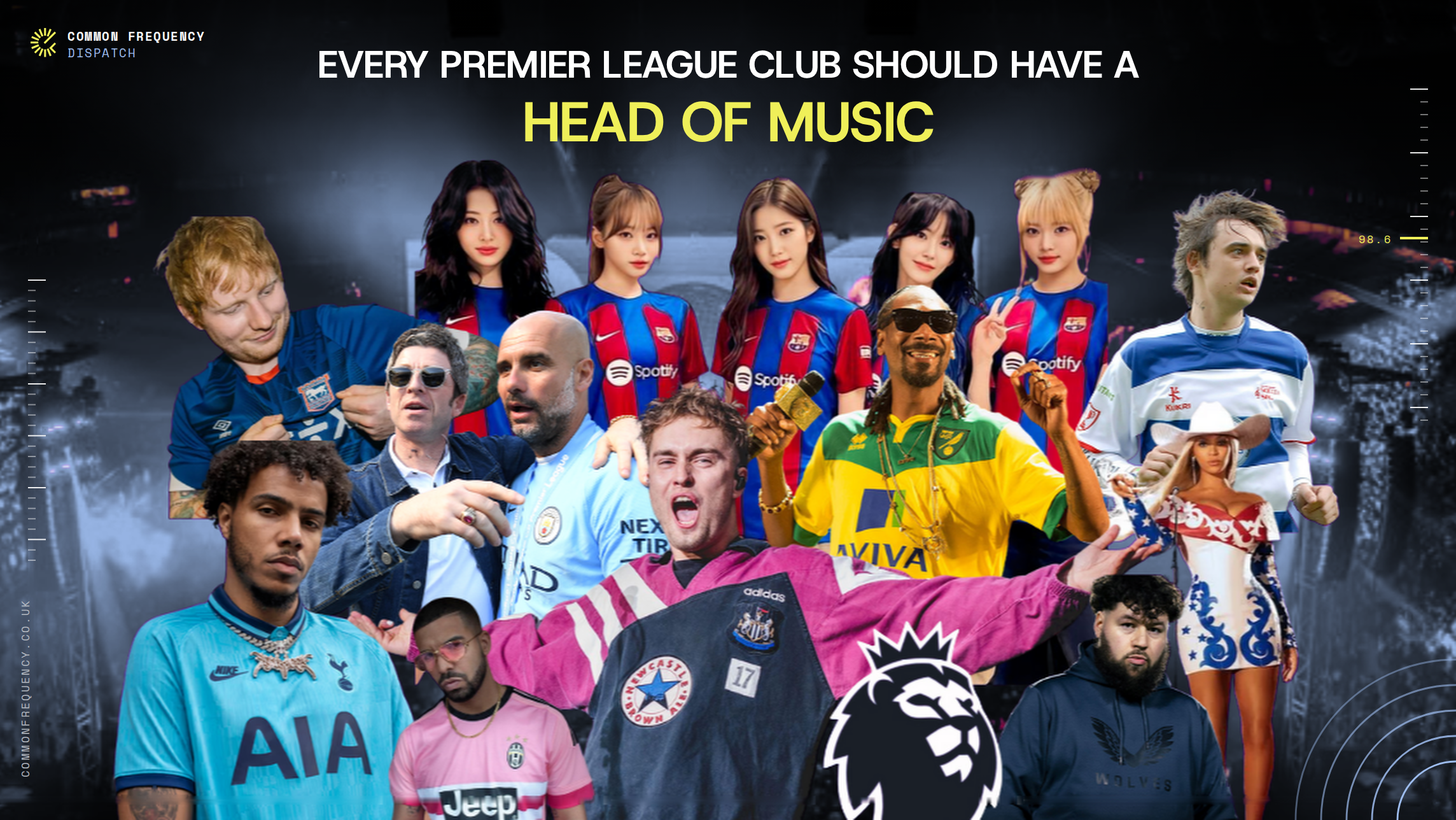
Then there are moments that happen organically, when music meets football in the public imagination. From Sam Fender wearing a Newcastle shirt on tour to AJ Tracey name-checking players in his songs, these artists are already acting as unofficial ambassadors for the clubs they support. The impact grows even further when those relationships are nurtured and activated properly.
Clubs are already dabbling in music, often successfully. But these efforts are fragmented, opportunistic, and largely reactive. With the right leadership, someone responsible for music across branding, content, events, sponsorship, and community, clubs could turn these scattered wins into a cohesive, long-term strategy.
What Would a Head of Music Actually Do?
Right now, music often enters football clubs through marketing, social media, or third-party campaigns, but no one owns it holistically. That’s the gap. In the same way clubs now have creative directors, for example, Crystal Palace, who appointed Kenny Annan-Jonathan to lead their fashion and cultural strategy, they need someone to shape their sound, support musicians, and make music part of the clubs DNA.
A Head of Music wouldn’t just pick pre-match playlists; they’d operate at the intersection of branding, fan engagement, and commercial strategy. As clubs grow into entertainment brands, the role would ensure music isn’t treated as background noise but as a central part of the club’s identity, revenue model, and cultural relevance.
On matchdays, they’d oversee the full sound environment, from warm-up tracks to walkout music, halftime performances, goal celebrations, and post-match atmospheres. Beyond the stadium, they’d curate official playlists in collaboration with fans and players, shaping the club’s sonic identity across Spotify, Apple Music, YouTube, and social media.
They would also manage music across all club content, setting the tone and energy for behind-the-scenes documentaries, branded partnerships, and viral social clips. With short-form content driving fan discovery, every reel, goal GIF, and tunnel cam becomes a sync opportunity.
Live performance is another major area. Clubs are sitting on powerful stages, from stadium gigs to fan zones and hospitality suites, yet most aren’t tapping into that potential. A Head of Music could turn these spaces into platforms for local artists, showcase events, and branded activations, making music a year-round part of the club’s community engagement strategy.
Commercially, the role could deliver music-led merchandise drops, artist collaborations, sync licensing, sponsored playlists, and branded content deals, all of which extend a club’s brand into new cultural territory. A Head of Music could help translate these tastes into fan-facing content and collaborations.
The Commercial Case: Revenue, Reach, and Relevance
For clubs looking to grow beyond matchday revenue, music isn’t just culture; it’s commerce. A Head of Music could help unlock new income streams, deepen audience engagement, and position the club as a truly multi-dimensional brand.
Licensing and sync opportunities are immediate. Music used in club content, whether for a TikTok goal montage or a full-length Amazon docuseries, requires rights clearance, negotiation, and payment. A Head of Music could manage those relationships, or better yet, license music from the club’s own artist partners or label imprint, generating new revenue while reducing costs.
Then there’s branded content and sponsorship. Music opens the door to partnerships with DSPs like Spotify and Apple Music, festivals, tech brands, and artists themselves. A well-curated playlist or content series could be sponsored, co-branded, or used to activate campaigns across multiple platforms.
Merchandise and fashion also present untapped potential. Music-led kit drops or apparel collaborations, like the Arsenal x Not3s collection, or PSG’s frequent artist-led designs, blend sport and streetwear into sellout products. A Head of Music could lead these collaborations, ensuring they’re rooted in authentic taste and aligned with club identity.
Perhaps most importantly, music extends a club’s global and generational relevance. Not every young fan watches full 90-minute games. But many discover clubs through YouTube, TikTok, or Instagram, where music is the entry point. By curating a distinctive sound and building relationships with tastemakers, clubs can strengthen brand affinity, especially among Gen Z and non-local audiences.
Artists have also sponsored or partnered with football clubs, showing clear commercial synergy. Ed Sheeran’s shirt sponsorship of Ipswich Town brought global attention, Fatboy Slim’s work with Brighton amp; Hove Albion reinforced local ties, and Wet Leg’s collaboration with their local side supported fundraising and awareness efforts.
Music also humanises players. Fans want to know what their favourite striker listens to before a match, or what the dressing room sounds like after a derby win. These are content opportunities, but more than that, they’re branding moments. The Head of Music can turn them into stories. If you have not seen it, make sure you check out the Teenage Haaland Rap video.
Support Grassroots Music
The idea of a Head of Music isn’t just good for clubs; it’s potentially transformative for local musicians and grassroots venues. Premier League teams are among the most visible cultural brands on the planet. If they took music seriously, they could become platforms for emerging talent, community culture hubs, and even global tastemakers.
Official playlists could spotlight local or unsigned artists to millions of listeners worldwide. Clubs could create a label or publishing arms, offering sync opportunities in goal videos, documentaries, or campaigns. Live music should become part of the matchday experience, from fan zones to halftime shows to post-match gigs. Clubs are looking for more ways to get fans to stadiums early and keep them there longer; the burgers alone no longer cut it.
Clubs could partner with grassroots music venues for pre-match events, after-parties, or artist development programmes, using their marketing reach to help fill small venues and sustain local music ecosystems.
They could also sponsor local gig series, fund rehearsal spaces, or offer club-owned facilities for community music use on non-matchdays. Working with councils and music boards, clubs could support venue protection campaigns and invest in soundproofing or accessibility improvements.
Its time to deepen the Squad.
Music isn’t a sideshow to football; it’s the soundtrack, the glue, and the next big opportunity. In the age of TikTok virality, global tours, and content convergence, every Premier League club should appoint a Head of Music.
