
CULTURAL INFRASTRUCTURE PREDICTIONS: EIGHT TRENDS SHAPING 2026
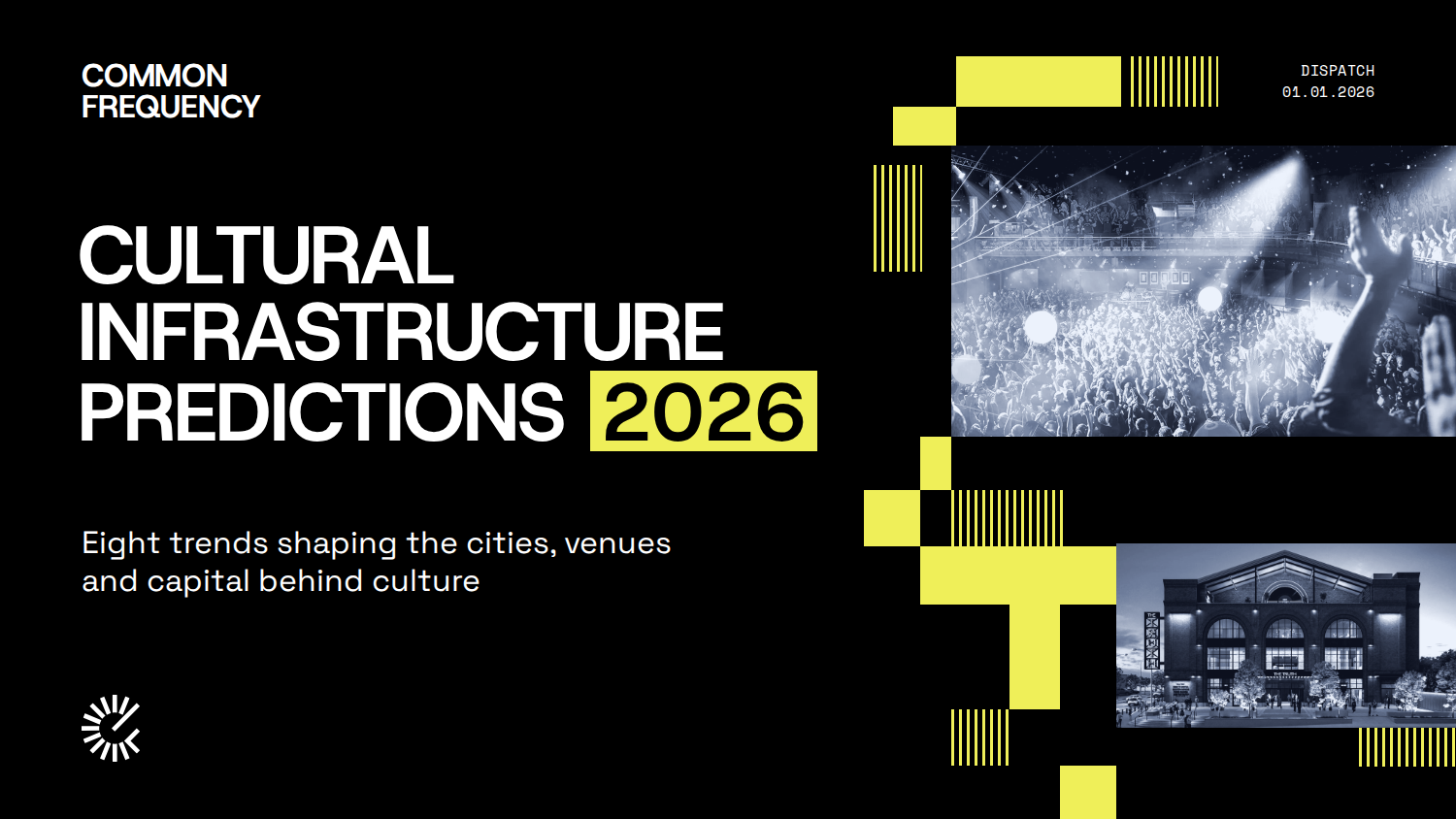
The global map of cultural infrastructure is being redrawn. The biggest markets are nearing saturation, capital is getting more selective, and the lines between sport, music, property and technology are blurring. Venues, districts and cultural spaces are now expected to prove their economic, social and commercial value long before a spade goes in the ground.
These are the eight trends we expect to define how cultural infrastructure is planned, funded and operated in 2026.
01. THE RACE FOR SECONDARY AND TERTIARY MARKETS
As major global markets, particularly in the US and Europe, approach saturation in their supply of large-scale cultural infrastructure, attention will shift toward second- and third-tier cities.
Developers, operators and investors will compete to secure land, partners and political support in places where demand is growing but supply remains thin.
The markets that can offer lower development costs, more flexible planning environments, financial incentives and the opportunity to establish flagship assets that define a region's cultural identity will benefit the most.
02. AN INFLUX OF NEW MID-SIZE VENUES
The sweet spot for modern mid-sized venues sits between 3,000 and 6,000 capacity, depending on population density and market maturity, yet this segment remains underserved worldwide.
These venues are easier to finance and deliver than full arenas but still require robust business cases, diversified revenue streams and clear evidence of market growth to succeed.
2026 will see a substantial rise in mid-size venue announcements, particularly in cities seeking to grow tourism, expand their night-time economy and attract touring artists priced out of arenas.
03. THE RELATIONSHIP BETWEEN SPORT, MUSIC AND CULTURE WILL INTENSIFY
Mixed-use entertainment districts are now central to urban regeneration strategies worldwide, yet the integration between sport and music is still early in its evolution.
With the 2026 FIFA World Cup acting as a catalyst, deeper collaboration between clubs, leagues, promoters and cultural operators will emerge. Joint programming, co-branded events and shared infrastructure will become more common, especially in markets still building the case for year-round revenue generation.
Less mature regions will begin exploring how sport-anchored developments can host music, culture and community programming on non-matchdays, unlocking new value from their assets.
04. ACCESS TO FUNDING WILL CONTINUE TO SLOW PROGRESS
Financing timelines will lengthen as public budgets tighten and private capital becomes more selective. Public-private partnerships will grow in importance but also become harder to secure.
Projects that clearly communicate social value, economic impact, environmental alignment and long-term resilience will be first in line for tax incentives, land agreements and blended finance.
Rising interest rates and construction costs will demand sharper feasibility testing, more creative capital stacks and operators who can demonstrate proven commercial performance.
05. NAMING RIGHTS AND BRAND PARTNERSHIPS WILL MOVE INTO THE MIDDLE OF THE MARKET
As competition intensifies and operating costs rise, mid-market venues will increasingly explore naming rights, presenting sponsorships and branded experience opportunities traditionally reserved for major venues.
Brands will view these as gateways to local communities, younger audiences and culturally engaged consumers.
The challenge will be to develop partnership models that feel authentic, enhance the audience experience and deliver measurable value for all stakeholders, rather than simply applying a name to the façade.
06. ARTISTS FOR EQUITY
A new era of artist-led investment is emerging. Major acts will increasingly align themselves not only with music and cultural developments but also with broader real-estate ventures, using their influence, audience reach and cultural capital to accelerate projects and shape place-making strategies. For investors and developers, this provides instant brand equity.
For artists, it represents long-term ownership, revenue diversification and a deeper role in shaping cultural ecosystems.
This trend will not be limited to global stars. A grassroots artist-ownership movement will grow, with emerging artists taking stakes in collectives, micro-venues, creative hubs and community-driven developments. Ensuring these partnerships remain authentic, mutually beneficial and fair will be the key challenge.
07. TECHNOLOGY AND AI WILL RESHAPE HOW CULTURAL ASSETS ARE PLANNED, FUNDED AND OPERATED
AI-driven modelling, digital twins and predictive analytics will become more common in planning and operating cultural infrastructure. Cities, developers and operators will use these tools to simulate demand, optimise programming, forecast revenues and reduce risk. Personalised discovery and dynamic pricing will widen participation but raise new questions about equity and data use.
Newer venues will integrate AI into building management, crowd flow, security and energy systems, enabling more efficient operations. Those who adopt these tools will gain a clear commercial advantage; those who do not will struggle to meet new expectations from funders, artists and audiences.
08. COMMUNITY-DRIVEN CULTURAL SPACES WILL GAIN MOMENTUM
Smaller cultural assets will increasingly be delivered through public-sector intervention and community partnerships, driven by demand for authentic, affordable live experiences as major events become less accessible for many audiences.
Their limited revenue potential will make private real estate cautious, highlighting a growing disconnect between cultural need and commercial viability.
The projects that succeed will be those supported by new policy tools such as cultural land trusts, subsidised leases, shared-risk models and targeted regeneration funding.
THE BIGGER PICTURE
Taken together, these trends point in one direction. The next wave of cultural infrastructure will be smaller, smarter and more closely tied to the places it serves. Capital will follow projects that can evidence their value, partnerships will need to be built on more than a logo, and the cities that move first will set the cultural identity of their regions for decades.
The opportunity is significant, but so is the competition for it. The projects that win will be the ones that bring artists, communities, operators and investors onto the same frequency from day one.
