
DISPATCHES
Dispatches provide evidence-led insights and analysis on the trends and opportunities connecting entertainment, sport, and urban development.
Own the City: The Case for Artist-Led Development
A pitch deck for a new cultural development in Atlanta did the rounds last year. For most of its slides it looked like any other mixed-use scheme: retail, residential, a venue, and renderings full of people enjoying themselves. Then came a slide with a single photo of Ludacris, listed as part of the development team, and the whole project read differently.
If one name on one slide can change how industry insiders see a project, it's worth asking what real artist involvement could do for investors, audiences, local communities and the long-term value of a development.
More than a Face on a Flyer
Artists have been lending their names to fashion labels, energy drinks and cars for decades. Real estate has mostly kept them at arm's length. When they do turn up, it's usually to cut a ribbon, supply a quote for the press release or play a short residency around the opening.
That is starting to change. A growing number of artists are putting in capital, sitting in design meetings and helping write the brief from day one. They're drawing on years of experience in other people's buildings to shape how new cultural spaces get built and run.
Artists have always performed in cities, and plenty have endorsed them. Now some are starting to own pieces of them. Ownership comes with creative authority, a financial stake and a reason to stick around, which is a very different arrangement from a sponsorship deal.
The Barclays Center shows the limits of the old model. Jay-Z opened the arena with a multi-night residency and became its public face, giving it a cultural authority no marketing campaign could have delivered. But his stake was a fraction of a percent, he sold it within a year, and he moved on. An endorsement lasts for a moment, while an investment keeps an artist involved for years. The smartest artists increasingly know which one they want.
The US Leads the Way
Across the US, artists are no longer waiting to be approached as tenants or brand ambassadors. They're arriving as investors and co-creators, and in some cases they're the ones driving major urban projects.
In Atlanta, Centennial Yards is a $5 billion scheme turning the long-derelict Gulch into homes, hotels, shops and entertainment space. Usher, 2 Chainz and Killer Mike are all investors. Their involvement changes the conversation in the room, because they know the city's audiences, its cultural dynamics and where the community sensitivities lie. That kind of knowledge is hard to buy. Live Nation has signed on to operate the planned 5,300-seat venue, and for promoters and touring artists, those names are a sign the place has credibility from the inside.
In Shreveport, Louisiana, 50 Cent has committed $124 million to turning downtown into a hub for film, music and live entertainment. The plan covers a renovated venue, an upgraded production campus and a new immersive venue that he will own outright. Two of the three properties had sat empty for years, passed over by conventional developers. He saw infrastructure the industry needed and decided to build it himself, in a city he believes in.
Hollywood has its own examples. Grammy-winning producer Philip Lawrence is leading a $500 million cultural campus on Sunset Boulevard, combining recording studios, performance space and a pipeline into local performing arts education. Around the same time, John Mayer bought the historic Chaplin Studios lot and committed to keeping it a working space for the creative community.
The scale and approach vary, but the instinct is the same: instead of waiting for someone else to build the infrastructure, these artists are building it themselves.
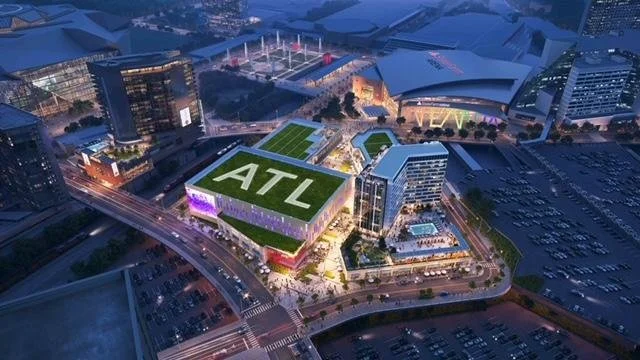
Image: Centennial Yards Atlanta
The UK Proof of Concept
The UK has been slower to take up artist-led development, but it has one standout example.
While still touring with Mumford & Sons, Ben Lovett opened Omeara near London Bridge. It's a 325-capacity venue designed around what he'd learned from playing more than a thousand venues around the world. Every detail was considered, from acoustics, sightlines and green rooms to fair deals for artists and a space that feels exciting to walk into.
His company, TVG, has since gone further. The Orion Amphitheater in Huntsville, Alabama, is an 8,000-capacity outdoor venue widely praised for the audience experience, and its backers include Irving Azoff. "You have to put the artist and the fan at the centre of every thought process," Azoff has said. "That's the key, and TVG are both artists and fans."
The stage and architecture at The Orion are impressive, but the backstage is what stands out. The green rooms, the load-in and the loading bays all reflect people who have played in poorly equipped venues and know what performers actually need. On a site visit, TVG partner Ryan Murphy spent more time on loading bays and backstage areas than on anything front of house, which says a lot about why the venue works.
Montreal: The Radical Experiment
Montreal is asking bolder questions still. The Rent Free Coalition, a partnership of artists, cultural entrepreneurs and urban developers, starts from a simple premise: what if artists became the developers? Its argument is that artists are essential workers, on a par with teachers and healthcare staff, and that cities should be organised to reflect that.
Rather than leaving artists at the mercy of the property market, the coalition wants to put them at the centre of it. The ambition goes well beyond entertainment districts to the wider fabric of the city. Artists tend to understand how neighbourhoods actually work: how communities move, where culture gathers and what keeps a creative scene alive.
The For/By Principle
Not every artist-led project lands. Pharrell Williams and designer Nigo are creating Japa Valley Tokyo, a 10,000 square metre pop-up district of art, retail and hospitality modelled on California's Napa Valley. It's an interesting idea on paper, but the tension between cultural ambition and commercial scaffolding is hard to miss.
The difference comes down to authenticity. Centennial Yards, The Orion and Omeara work because they're made for artists and by artists. Projects struggle when the celebrity involvement looks like branding added on top rather than real co-creation, and communities can tell.
Spaces work best when the people who'll use them help shape them. That means more than signing off a mood board or a colour palette. It means real input into the brief, the design, the programming and how the place is run over the long term.
Artists read spaces in ways developers often can't. They know how a room feels half-full compared with packed. They know why green rooms and load-in matter, how crowds move, and how a long wait at the cloakroom can sour an otherwise great night. That's practical expertise that affects how a venue runs, not just how it looks.
The commercial case
For developers and investors, the argument is financial as well as cultural. A credible artist partner brings an audience, a network, taste and legitimacy, and that influence grows over time in a way a marketing budget can't match. Jay-Z's Barclays residency made headlines for a season, while Lovett's work on Omeara and The Orion produced venues that are still earning their reputations.
Artists attract other artists, and they bring in promoters. Their feel for programming feeds straight into a venue's commercial performance. Cultural credibility is hard to fake and easy to lose, but once a venue has earned it, it tends to last.
The opportunity
The trend is gathering pace. When artists are embedded in the development process with real authority and a real stake, the spaces tend to perform better. Communities notice, and the returns show it.
The appetite is there on both sides of the Atlantic, and the examples are already built. What's less certain is whether developers and cities are ready to give artists a real seat at the table, one that comes with decisions and not just an invitation to opening night.
Some of these projects will stumble. But artists have spent their careers reading rooms and working out what makes a space feel alive, and they're no longer waiting to be asked in. The right artist partner brings far more than a name: a community, credibility and a personal stake in the outcome. When an artist owns part of a place, its success is their success too, and that's a strong reason for cities and developers to start listening.
CULTURAL INFRASTRUCTURE PREDICTIONS: EIGHT TRENDS SHAPING 2026
The global map of cultural infrastructure is being redrawn. The biggest markets are nearing saturation, capital is getting more selective, and the lines between sport, music, property and technology are blurring. Venues, districts and cultural spaces are now expected to prove their economic, social and commercial value long before a spade goes in the ground.
These are the eight trends we expect to define how cultural infrastructure is planned, funded and operated in 2026.
01. THE RACE FOR SECONDARY AND TERTIARY MARKETS
As major global markets, particularly in the US and Europe, approach saturation in their supply of large-scale cultural infrastructure, attention will shift toward second- and third-tier cities.
Developers, operators and investors will compete to secure land, partners and political support in places where demand is growing but supply remains thin.
The markets that can offer lower development costs, more flexible planning environments, financial incentives and the opportunity to establish flagship assets that define a region's cultural identity will benefit the most.
02. AN INFLUX OF NEW MID-SIZE VENUES
The sweet spot for modern mid-sized venues sits between 3,000 and 6,000 capacity, depending on population density and market maturity, yet this segment remains underserved worldwide.
These venues are easier to finance and deliver than full arenas but still require robust business cases, diversified revenue streams and clear evidence of market growth to succeed.
2026 will see a substantial rise in mid-size venue announcements, particularly in cities seeking to grow tourism, expand their night-time economy and attract touring artists priced out of arenas.
03. THE RELATIONSHIP BETWEEN SPORT, MUSIC AND CULTURE WILL INTENSIFY
Mixed-use entertainment districts are now central to urban regeneration strategies worldwide, yet the integration between sport and music is still early in its evolution.
With the 2026 FIFA World Cup acting as a catalyst, deeper collaboration between clubs, leagues, promoters and cultural operators will emerge. Joint programming, co-branded events and shared infrastructure will become more common, especially in markets still building the case for year-round revenue generation.
Less mature regions will begin exploring how sport-anchored developments can host music, culture and community programming on non-matchdays, unlocking new value from their assets.
04. ACCESS TO FUNDING WILL CONTINUE TO SLOW PROGRESS
Financing timelines will lengthen as public budgets tighten and private capital becomes more selective. Public-private partnerships will grow in importance but also become harder to secure.
Projects that clearly communicate social value, economic impact, environmental alignment and long-term resilience will be first in line for tax incentives, land agreements and blended finance.
Rising interest rates and construction costs will demand sharper feasibility testing, more creative capital stacks and operators who can demonstrate proven commercial performance.
05. NAMING RIGHTS AND BRAND PARTNERSHIPS WILL MOVE INTO THE MIDDLE OF THE MARKET
As competition intensifies and operating costs rise, mid-market venues will increasingly explore naming rights, presenting sponsorships and branded experience opportunities traditionally reserved for major venues.
Brands will view these as gateways to local communities, younger audiences and culturally engaged consumers.
The challenge will be to develop partnership models that feel authentic, enhance the audience experience and deliver measurable value for all stakeholders, rather than simply applying a name to the façade.
06. ARTISTS FOR EQUITY
A new era of artist-led investment is emerging. Major acts will increasingly align themselves not only with music and cultural developments but also with broader real-estate ventures, using their influence, audience reach and cultural capital to accelerate projects and shape place-making strategies. For investors and developers, this provides instant brand equity.
For artists, it represents long-term ownership, revenue diversification and a deeper role in shaping cultural ecosystems.
This trend will not be limited to global stars. A grassroots artist-ownership movement will grow, with emerging artists taking stakes in collectives, micro-venues, creative hubs and community-driven developments. Ensuring these partnerships remain authentic, mutually beneficial and fair will be the key challenge.
07. TECHNOLOGY AND AI WILL RESHAPE HOW CULTURAL ASSETS ARE PLANNED, FUNDED AND OPERATED
AI-driven modelling, digital twins and predictive analytics will become more common in planning and operating cultural infrastructure. Cities, developers and operators will use these tools to simulate demand, optimise programming, forecast revenues and reduce risk. Personalised discovery and dynamic pricing will widen participation but raise new questions about equity and data use.
Newer venues will integrate AI into building management, crowd flow, security and energy systems, enabling more efficient operations. Those who adopt these tools will gain a clear commercial advantage; those who do not will struggle to meet new expectations from funders, artists and audiences.
08. COMMUNITY-DRIVEN CULTURAL SPACES WILL GAIN MOMENTUM
Smaller cultural assets will increasingly be delivered through public-sector intervention and community partnerships, driven by demand for authentic, affordable live experiences as major events become less accessible for many audiences.
Their limited revenue potential will make private real estate cautious, highlighting a growing disconnect between cultural need and commercial viability.
The projects that succeed will be those supported by new policy tools such as cultural land trusts, subsidised leases, shared-risk models and targeted regeneration funding.
THE BIGGER PICTURE
Taken together, these trends point in one direction. The next wave of cultural infrastructure will be smaller, smarter and more closely tied to the places it serves. Capital will follow projects that can evidence their value, partnerships will need to be built on more than a logo, and the cities that move first will set the cultural identity of their regions for decades.
The opportunity is significant, but so is the competition for it. The projects that win will be the ones that bring artists, communities, operators and investors onto the same frequency from day one.
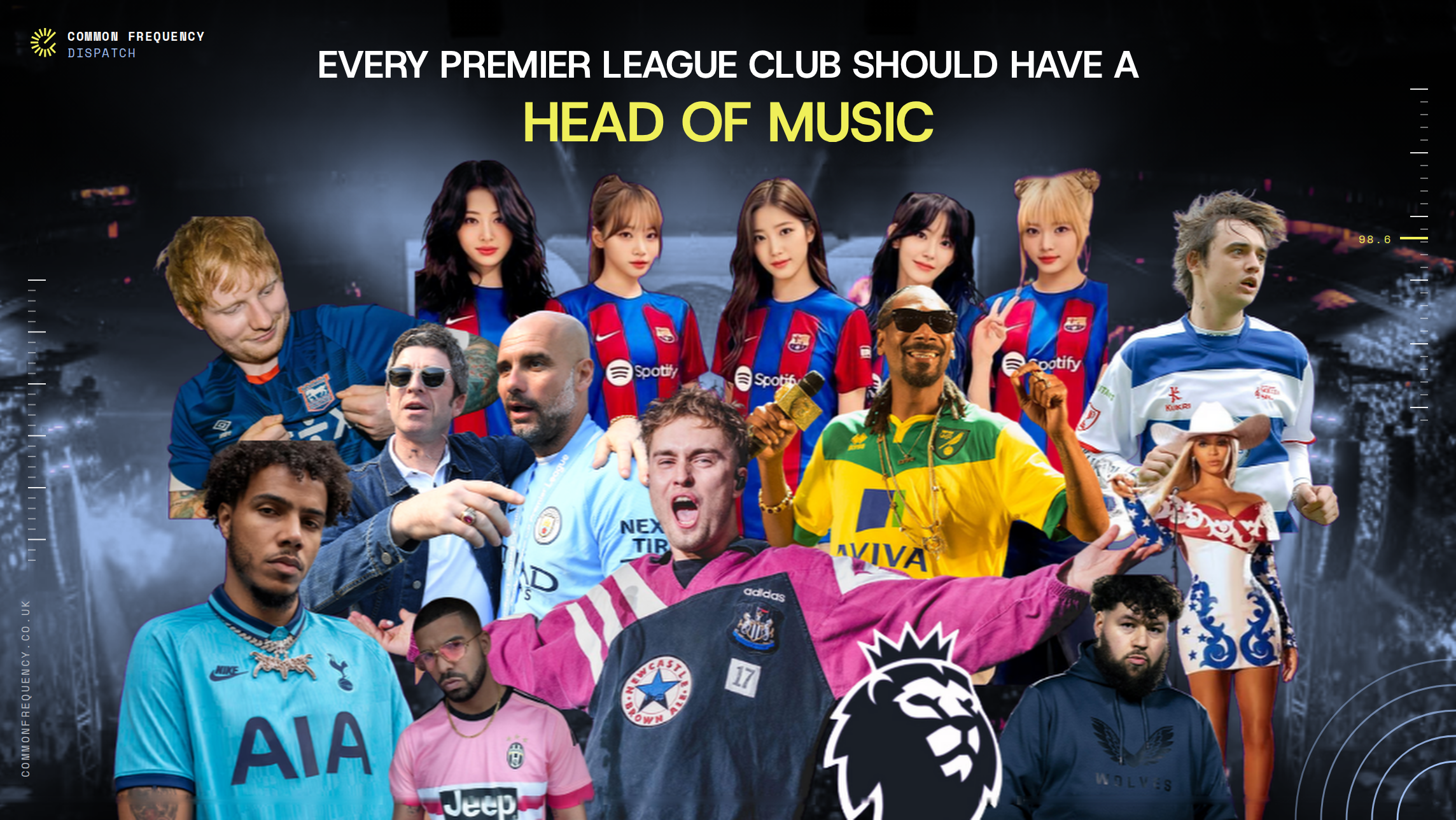
EVERY Premier League Football Club Should Have a HEAD OF MUSIC
In 2021, I managed to get a meeting with the Head of Marketing at Tottenham Hotspur, my boyhood club. My opening pitch was simple: “You should buy the rights to Chas and Dave’s back catalogue as a new stream of revenue for the club.” I knew it was a slightly ridiculous suggestion, but I wanted to make a point. It got their attention, and it marked the start of my fascination with the intersection between football and music, two of Britain’s most powerful cultural exports, too often treated as strangers.
Premier League football clubs are mostly well-oiled machines. Every function is managed by a specialist: ticketing, hospitality, digital content, right down to the data analytics used to measure every pass and sprint. Beyond the pitch, the most carefully protected asset is the club’s brand, a growing priority in the era of global fanbases and off-field revenue.
Football is all about statistics these days, so lets look at the numbers.
The UK’s music industry, spanning live events, recorded music, and publishing, contributed £6.7 billion to the economy in 2022. It supports nearly 210,000 jobs and generates £4 billion in exports. Live music alone brought in over £1.6 billion, fuelled by strong fan demand at stadiums, festivals, and grassroots venues.
Football, by comparison, is similarly dominant. The Premier League alone generates over £3 billion annually in broadcasting revenue, with the wider UK football sector valued at £6.2 billion. Clubs now function as content studios, commercial brands, and event operators, not just sporting institutions.
So, music and football are economic equals in the UK, two industries embedded in national identity, with massive cultural and commercial reach. Yet despite the clear overlap, music is rarely managed strategically inside football clubs.
That’s a structural blind spot. Clubs have heads of performance, heads of fashion, even heads of crypto, but no Head of Music, a role that could unite fan engagement, brand positioning, revenue, and culture under one cohesive strategy.
A Shared History: Chants, Anthems, and Club Culture
The relationship between music and football isn't new; it’s foundational. For decades, the sounds of the game have been just as iconic as the goals. Chants and terrace songs have shaped the atmosphere of stadiums, creating a shared language among fans that transcends generations. From Liverpool’s adoption of “You’ll Never Walk Alone” to the widespread use of pop anthems like “Freed from Desire,” music has always been the emotional engine of matchdays.
The connection between music and football started decades ago. Clubs and national teams regularly released official singles, some of which became genuine hits. Tottenham Hotspur’s “Ossie’s Dream” in 1981, or England’s “World in Motion” by New Order in 1990, blurred the lines between sport and pop culture. They were expressions of identity, moments when music and football collided to reflect the mood of fans and the character of clubs.
Football culture has always had its own soundtrack, created organically by fans and amplified through history. But in today’s hyper-commercial landscape, very few clubs take ownership of their musical identity. What was once an informal tradition is now a missed opportunity. With the right leadership, it could be transformed into a strategic asset.
The Modern Shift: Football Clubs as Entertainment Brands
Like it or not, Premier League clubs are no longer just football teams; they are global media, fashion, and lifestyle brands. From content creation to commercial partnerships, clubs are expected to engage fans 24/7, not just for 90 minutes on matchday. Music plays a central role in this shift, but it’s often treated as background noise rather than a strategic asset.
A few clubs are starting to challenge that. In 2021, Wolverhampton Wanderers launched Wolves Records, becoming the first UK football club to create an in-house record label. The initiative, developed in partnership with Warner Music’s ADA, allows the club to sign and promote artists, produce original content, and connect local music with global football audiences.
Meanwhile, Aston Villa has been curating and publishing official playlists on Spotify, often with input from players and fans. It’s a small step, but one that recognises music as part of the club’s identity and a tool for building stronger fan engagement on and off the pitch.
Large concerts have always been a major success. Stadiums like Tottenham Hotspur’s now rival the O2 in hosting global tours. Beyoncé, Lady Gaga, Guns N’ Roses have all performed there. Anfield has hosted Elton John and will soon welcome Taylor Swift. These aren’t just side hustles; they’re major revenue streams and fan touchpoints, often involving partnerships with artists, promoters, and sponsors. Stadiums are now competing for artists like any arena or major festival.
Looking at the plans for the proposed new Manchester United Stadium, it’s clear that they are thinking about wider cultural entertainment as both a way to generate new revenue and connect with new fans - they want to create a global destination. Live Music will certainly feature and will no doubt be part of the experience going forward.
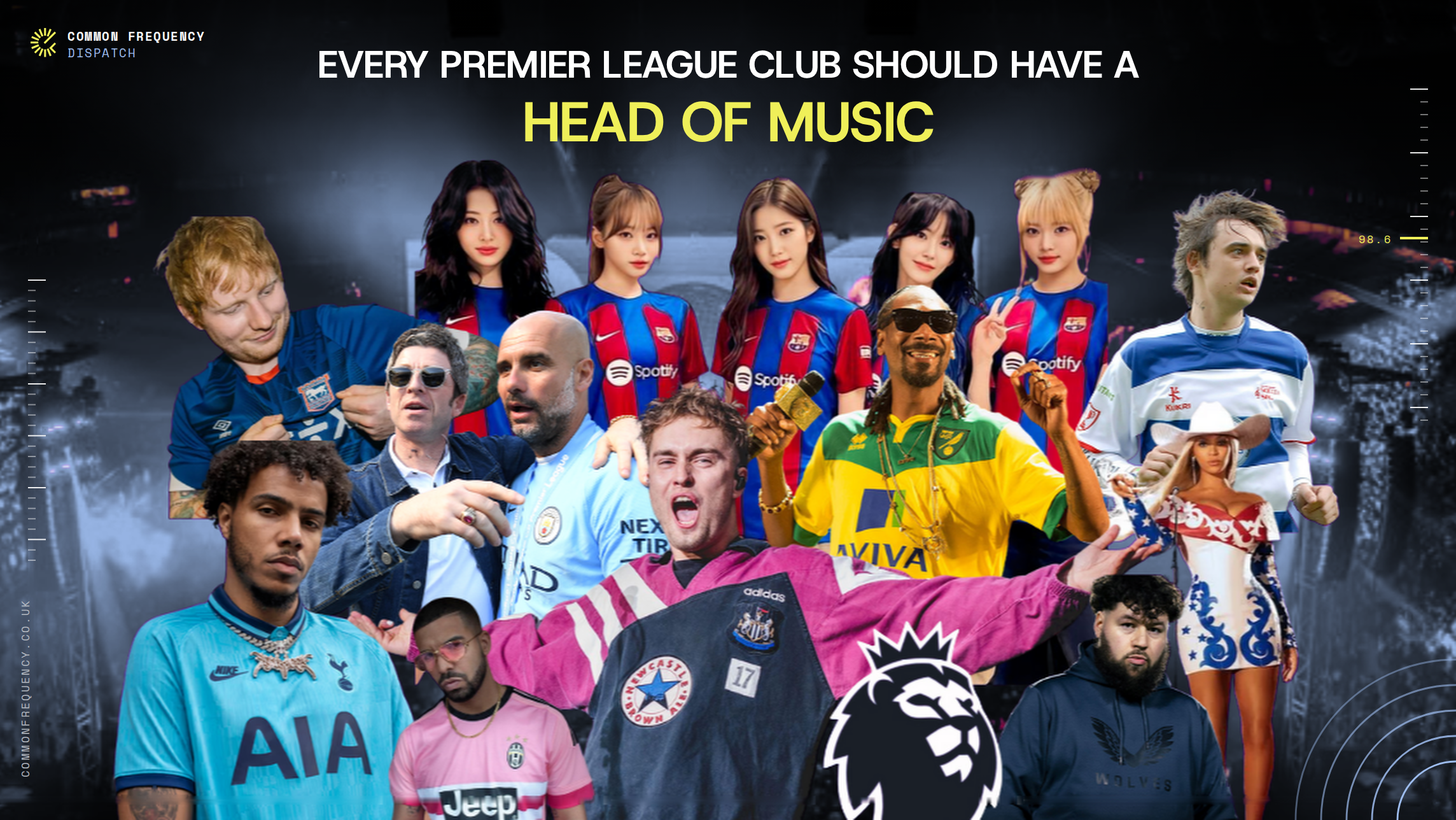
Then there are moments that happen organically, when music meets football in the public imagination. From Sam Fender wearing a Newcastle shirt on tour to AJ Tracey name-checking players in his songs, these artists are already acting as unofficial ambassadors for the clubs they support. The impact grows even further when those relationships are nurtured and activated properly.
Clubs are already dabbling in music, often successfully. But these efforts are fragmented, opportunistic, and largely reactive. With the right leadership, someone responsible for music across branding, content, events, sponsorship, and community, clubs could turn these scattered wins into a cohesive, long-term strategy.
What Would a Head of Music Actually Do?
Right now, music often enters football clubs through marketing, social media, or third-party campaigns, but no one owns it holistically. That’s the gap. In the same way clubs now have creative directors, for example, Crystal Palace, who appointed Kenny Annan-Jonathan to lead their fashion and cultural strategy, they need someone to shape their sound, support musicians, and make music part of the clubs DNA.
A Head of Music wouldn’t just pick pre-match playlists; they’d operate at the intersection of branding, fan engagement, and commercial strategy. As clubs grow into entertainment brands, the role would ensure music isn’t treated as background noise but as a central part of the club’s identity, revenue model, and cultural relevance.
On matchdays, they’d oversee the full sound environment, from warm-up tracks to walkout music, halftime performances, goal celebrations, and post-match atmospheres. Beyond the stadium, they’d curate official playlists in collaboration with fans and players, shaping the club’s sonic identity across Spotify, Apple Music, YouTube, and social media.
They would also manage music across all club content, setting the tone and energy for behind-the-scenes documentaries, branded partnerships, and viral social clips. With short-form content driving fan discovery, every reel, goal GIF, and tunnel cam becomes a sync opportunity.
Live performance is another major area. Clubs are sitting on powerful stages, from stadium gigs to fan zones and hospitality suites, yet most aren’t tapping into that potential. A Head of Music could turn these spaces into platforms for local artists, showcase events, and branded activations, making music a year-round part of the club’s community engagement strategy.
Commercially, the role could deliver music-led merchandise drops, artist collaborations, sync licensing, sponsored playlists, and branded content deals, all of which extend a club’s brand into new cultural territory. A Head of Music could help translate these tastes into fan-facing content and collaborations.
The Commercial Case: Revenue, Reach, and Relevance
For clubs looking to grow beyond matchday revenue, music isn’t just culture; it’s commerce. A Head of Music could help unlock new income streams, deepen audience engagement, and position the club as a truly multi-dimensional brand.
Licensing and sync opportunities are immediate. Music used in club content, whether for a TikTok goal montage or a full-length Amazon docuseries, requires rights clearance, negotiation, and payment. A Head of Music could manage those relationships, or better yet, license music from the club’s own artist partners or label imprint, generating new revenue while reducing costs.
Then there’s branded content and sponsorship. Music opens the door to partnerships with DSPs like Spotify and Apple Music, festivals, tech brands, and artists themselves. A well-curated playlist or content series could be sponsored, co-branded, or used to activate campaigns across multiple platforms.
Merchandise and fashion also present untapped potential. Music-led kit drops or apparel collaborations, like the Arsenal x Not3s collection, or PSG’s frequent artist-led designs, blend sport and streetwear into sellout products. A Head of Music could lead these collaborations, ensuring they’re rooted in authentic taste and aligned with club identity.
Perhaps most importantly, music extends a club’s global and generational relevance. Not every young fan watches full 90-minute games. But many discover clubs through YouTube, TikTok, or Instagram, where music is the entry point. By curating a distinctive sound and building relationships with tastemakers, clubs can strengthen brand affinity, especially among Gen Z and non-local audiences.
Artists have also sponsored or partnered with football clubs, showing clear commercial synergy. Ed Sheeran’s shirt sponsorship of Ipswich Town brought global attention, Fatboy Slim’s work with Brighton amp; Hove Albion reinforced local ties, and Wet Leg’s collaboration with their local side supported fundraising and awareness efforts.
Music also humanises players. Fans want to know what their favourite striker listens to before a match, or what the dressing room sounds like after a derby win. These are content opportunities, but more than that, they’re branding moments. The Head of Music can turn them into stories. If you have not seen it, make sure you check out the Teenage Haaland Rap video.
Support Grassroots Music
The idea of a Head of Music isn’t just good for clubs; it’s potentially transformative for local musicians and grassroots venues. Premier League teams are among the most visible cultural brands on the planet. If they took music seriously, they could become platforms for emerging talent, community culture hubs, and even global tastemakers.
Official playlists could spotlight local or unsigned artists to millions of listeners worldwide. Clubs could create a label or publishing arms, offering sync opportunities in goal videos, documentaries, or campaigns. Live music should become part of the matchday experience, from fan zones to halftime shows to post-match gigs. Clubs are looking for more ways to get fans to stadiums early and keep them there longer; the burgers alone no longer cut it.
Clubs could partner with grassroots music venues for pre-match events, after-parties, or artist development programmes, using their marketing reach to help fill small venues and sustain local music ecosystems.
They could also sponsor local gig series, fund rehearsal spaces, or offer club-owned facilities for community music use on non-matchdays. Working with councils and music boards, clubs could support venue protection campaigns and invest in soundproofing or accessibility improvements.
Its time to deepen the Squad.
Music isn’t a sideshow to football; it’s the soundtrack, the glue, and the next big opportunity. In the age of TikTok virality, global tours, and content convergence, every Premier League club should appoint a Head of Music.